
Bringing G.R.A.C.E. to Life: Building an Interactive Terminal System
How we turned a simple computer interface into an interactive storytelling tool inside Project Meridian.
 FIELD NOTES / SIDE QUEST STUDIOS
A computer terminal might seem like a small detail in a video game. A screen, some buttons, and a few lines of text. Nothing particularly exciting.
But while developing Project Meridian, we started asking a different question: What if the terminals scattered throughout the world could become something more?
What if they could help tell the story?
More Than a Computer Screen
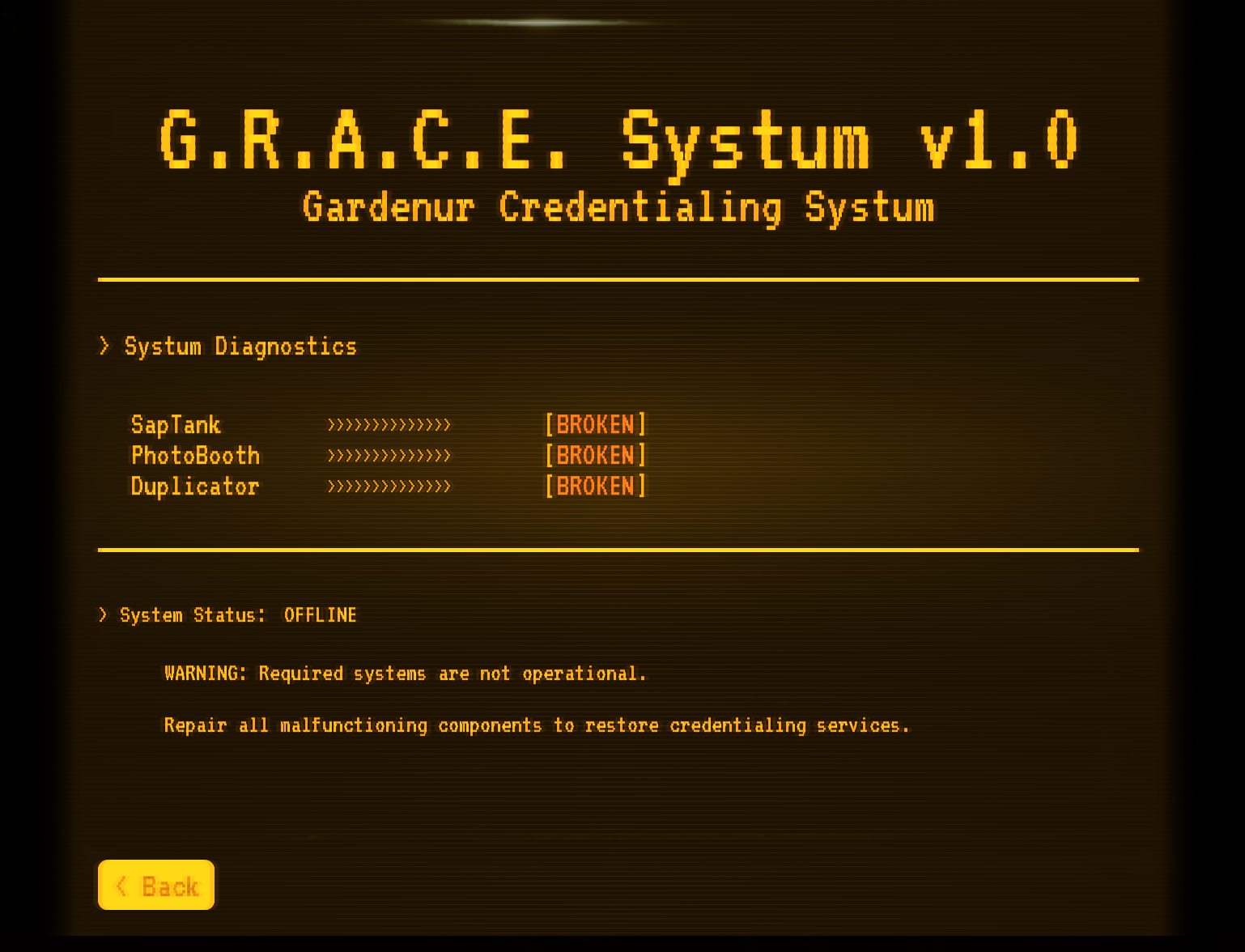
Our first major terminal implementation belongs to G.R.A.C.E., one of the central systems players will encounter while exploring the facility.
Initially, the goal was relatively straightforward: create an interactive interface that players could access to examine information about the system.
As development progressed, that interface started becoming much more ambitious.
We introduced multiple screens, including diagnostics, schematic information, and journal entries. Rather than presenting everything at once, players navigate between different sections of the terminal.
The result feels less like opening a traditional game menu and more like interacting with an actual piece of equipment.
Building the System in Blueprints
One of the biggest lessons we’ve learned throughout development is the importance of creating systems that can be reused.
Our terminal framework is built using Unreal Engine’s Blueprint system, with interaction logic that can support different terminal implementations.
This becomes particularly useful when we want terminals throughout the facility to serve different purposes.
One might provide technical diagnostics. Another might contain a personal journal. A third could reveal something about the people who once worked there.
The underlying interaction system can remain consistent while the content and behavior change.
Giving the Interface a Personality
Functionality was only half the challenge.
We wanted the terminal to feel like a piece of technology that actually belongs in the world of Project Meridian.
That meant experimenting with scanlines, emissive materials, subtle screen distortion, and animated interface elements.
We also spent time refining how the interface transitions between screens.
These effects are intentionally restrained. The goal isn’t to overwhelm the player with visual noise, but to create the impression of an aging system that’s still operating.
A New Way to Tell the Story
Perhaps the most exciting development is how these terminals can support environmental storytelling.
Instead of relying entirely on cutscenes or direct exposition, we can allow players to discover information naturally.
Technical reports might reveal what went wrong inside the facility. Personal journal entries could introduce humor, frustration, or something more unsettling.
And because players choose whether to explore these terminals, the storytelling becomes part of the exploration itself.
What’s Next?
The G.R.A.C.E. terminal is an important first step, but it’s only the beginning.
As we continue developing Project Meridian, we plan to expand the terminal framework so that individual systems can present their own information, interactions, and personalities.
Sometimes the most interesting stories aren’t told by the characters standing in front of you.
Sometimes they’re waiting on an old computer screen.