
Building Atmosphere Through Environmental Storytelling
How lighting, environmental details, and abandoned spaces help bring the mysterious world of Project Meridian to life.
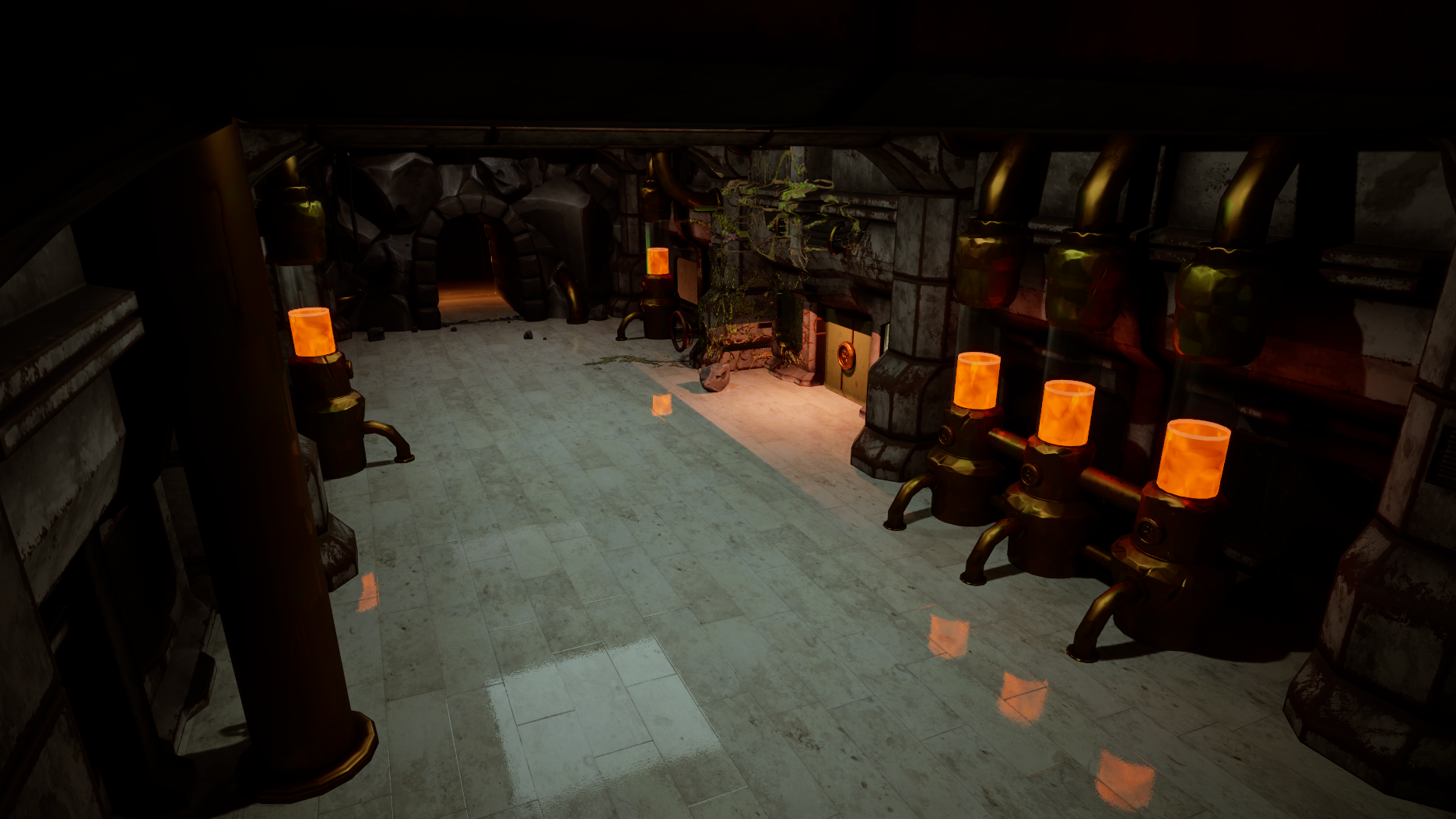 FIELD NOTES / SIDE QUEST STUDIOS
A hallway is just a hallway.
At least, that’s how it starts.
A few walls, a floor, some ceiling panels, and maybe a couple of doors. From a technical standpoint, you’ve created an environment. But from a player’s perspective, you haven’t necessarily created a place.
That’s something we’ve been thinking about quite a bit while developing Project Meridian.
How do you make an environment feel like it existed before the player arrived? How do you communicate that something happened there without stopping the game to explain it?
And perhaps most importantly, how do you make players curious enough to find out?
Making a Place Feel Lived In
Much of our recent environmental work has focused on the G.R.A.C.E. facility, one of the locations players will explore throughout Project Meridian.
We’re approaching its design with a simple philosophy: every environment should feel like it has a purpose and a history.
That means thinking beyond the immediate gameplay requirements.
A waiting area shouldn’t exist simply because we need somewhere to place chairs. It should feel like people once sat there, waited for something, and eventually left.
A computer terminal shouldn’t just be a convenient way to display information. It should feel like a piece of equipment that someone relied on to do their job.
Even seemingly insignificant details can help reinforce the illusion that the world exists independently of the player.
We’re discovering that environmental storytelling often begins with asking questions about the spaces we’re building.
Lighting Is More Than Illumination
One of the biggest transformations we’ve seen in our environments has come from lighting.
It’s remarkable how dramatically the mood of a location can change without altering a single piece of geometry.
A brightly illuminated corridor can feel sterile, functional, and relatively safe.
Take away some of that illumination, introduce deeper shadows, and suddenly the same corridor begins suggesting something entirely different.
We’ve been experimenting with localized lighting, atmospheric contrast, and environmental effects to create spaces that feel both visually interesting and emotionally suggestive.
One of our recent hallway experiments incorporated hanging electrical wires, with plans to introduce intermittent sparks and flickering illumination.
These details aren’t just there to look cool—although that’s certainly a bonus.
They suggest that the facility has experienced some degree of deterioration.
And they naturally encourage the player to wonder why.
The Power of What You Don’t Show
One thing we’re particularly interested in exploring is the relationship between visibility and imagination.
Sometimes an environment becomes more compelling when players can’t immediately see everything.
A darkened doorway.
An unfamiliar sound somewhere beyond the next room.
A flickering light that briefly reveals something in the distance.
None of these elements necessarily requires an enemy, a scripted encounter, or even an immediate explanation.
They work because the player begins filling in the gaps.
While Project Meridian isn’t intended to be a traditional horror game, we’re not interested in limiting ourselves to a single emotional tone.
There will be opportunities for humor, curiosity, tension, and potentially some genuinely unsettling moments.
The important thing is making those experiences feel appropriate to the world.
Environmental Storytelling Meets Interactive Storytelling
Of course, visual atmosphere can only communicate so much.
That’s where some of our other development systems begin connecting with the environment.
We’ve been building interactive terminals that allow players to access technical information, diagnostics, and journal entries throughout the facility.
These systems create opportunities to expand on what the environment suggests.
A damaged piece of machinery might raise a question.
A nearby terminal could provide part of the answer.
A personal journal might reveal an entirely different perspective on the same event.
We’re particularly excited about using journal entries to introduce personality into the world.
Not every discovery needs to be ominous or important to the central narrative.
Sometimes the most memorable thing a player finds might be a ridiculous complaint from a frustrated employee.
That contrast between atmosphere and personality is something we want to embrace.
Finding the Balance
Environmental design presents an interesting challenge: how much information should you give the player?
Explain too much, and there’s nothing left to discover.
Explain too little, and the environment risks feeling arbitrary.
We’re still experimenting with that balance.
Our goal is to create spaces that reward observation without requiring players to investigate every object to understand what’s happening.
Some details will contribute to the larger narrative. Others will simply make the world feel more believable.
And occasionally, something that initially seems insignificant might turn out to be more important than expected.
Building a World Worth Exploring
There’s still plenty of work ahead as we continue developing the environments of Project Meridian.
We’re refining lighting, adding environmental effects, expanding interactive systems, and looking for opportunities to give individual locations their own identities.
But one of the most valuable lessons we’ve learned so far is that creating an interesting environment isn’t necessarily about adding more objects.
It’s about giving the objects, spaces, and atmosphere a reason to exist.
Because a hallway shouldn’t just connect two rooms.
Sometimes, it should make you wonder whether you really want to see what’s around the corner.